
Políticas públicas
How Wearing a Luxury Watch Changes Your Psychology of Time
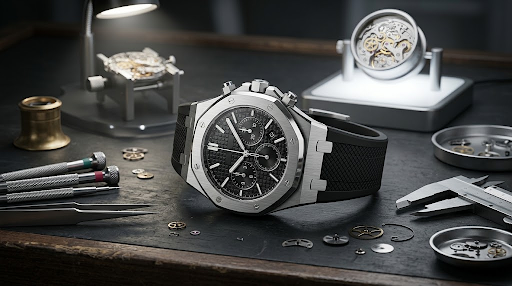
For many people, checking the time has become closely connected with checking a smartphone. A simple glance at the screen can quickly lead to notifications, emails, social media, or other distractions. Wearing a traditional wristwatch creates a different relationship with time by separating timekeeping from the digital world. A luxury watch can therefore influence more than appearance or personal style. Its physical presence, analog display, and daily ritual may encourage greater awareness of passing time. The Cartier Santos is an interesting example because its distinctive design combines historical significance with practical readability.
The Smartphone Time-Checking Problem
Smartphones are convenient clocks, but they are also powerful attention-management devices. When someone unlocks a phone to check the time, notifications and applications compete for attention. What begins as a two-second time check can become several minutes of unrelated activity. A dedicated wristwatch removes much of this temptation. Looking at the dial provides the information needed without opening another digital environment. For people trying to reduce unnecessary screen exposure, this small distinction can become surprisingly valuable.
Why the Santos Creates a Different Experience
The Cartier Santos has a strong connection between design and functionality. Cartier developed the original Santos for aviator Alberto Santos-Dumont, who needed to read the time while flying without repeatedly reaching for a pocket watch. Its square case, Roman numerals, visible bezel screws, and clear hands give the watch a recognizable visual identity. These characteristics can make checking the time feel more deliberate than reading a number on a smartphone. Those researching a Cartier Santos replica may find that similar design elements create much of the same visual experience. However, replica watches are not authentic Cartier products, and their materials, movements, finishing, and reliability can vary significantly.
Analog Displays and Time Awareness
Digital clocks communicate time through numbers, while analog watches represent time through physical positions. Instead of seeing only a numerical value, the wearer can observe how the hands relate to the hour and minute markers. This can create a more intuitive understanding of time passing. The position of the hands shows both the current moment and its relationship to the beginning and end of an hour. A watch psychology study can be useful when examining these kinds of behavioral differences, although individual responses to analog and digital time displays can vary. The broader idea is that the way information is presented may influence how people perceive and interact with it.
The Power of a Daily Watch Ritual
Putting on a watch every morning can also become a meaningful routine. Repeated physical actions often help people mark transitions between different activities and responsibilities. Fastening a watch before leaving home may signal the beginning of the working day, travel, or social commitments. Over time, the object can become associated with organization and personal intention. The psychological value does not necessarily depend on price. A carefully chosen Cartier clone watch or another mechanical timepiece can become meaningful through consistent use, provided the wearer values its design and daily ritual.
Creating Distance From Digital Distraction
A wristwatch also introduces a useful limitation: it tells time but does not compete for attention. It cannot display social media, send messages, or interrupt a conversation. That limitation can encourage people to remain focused on their surroundings. Waiting in a café, walking through a city, or sitting in a meeting can become less connected to constant phone checking.
A Simple Experiment
Anyone curious about the effect can try wearing a wristwatch every day for thirty days while keeping the smartphone out of immediate reach whenever possible. Notice whether time checks become quicker, whether distractions decrease, and whether the passage of hours feels more continuous. Ultimately, a wristwatch is more than a timekeeping device. Through design, ritual, and physical presence, it can become a subtle reminder to pay attention to how time is experienced and how deliberately it is being used.